
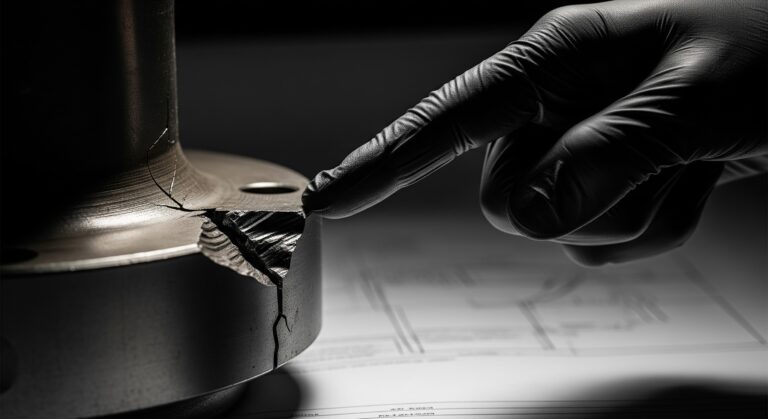
Grain bins and silos look simple from the outside — a cylindrical steel or concrete shell holding grain, feed, or other bulk material. They are critically important in many different applications – say agriculture for example. Structurally, they are anything but simple. A filled bin behaves nothing like an empty one, storms that produce high speed winds can overwhelm a design in seconds. Assembly issues such as loose bolts can also lead to damage or collapse. If vents become clogged a lower pressure inside the bin can lead to a roof collapse or even worse that results in thousands of bushels or grain being released.
When these types of failures happens, the losses go well beyond the cost of the bin itself: damaged or contaminated grain, cleanup, business interruption, and, in more serious cases when people are near in the area, injury or death. It’s also why grain bin and silo failures are sources of engineering litigation in agricultural and industrial settings, and why an accurate, defensible root-cause investigation matters as much to the outcome of a claim or lawsuit as the failure itself.
Why Bin and Silo Failures Happen So Often
A grain bin or silo is engineered around the behavior of the material stored inside it — its density, moisture content, flow characteristics, and the friction it generates against the wall as it’s loaded and unloaded. Grain or particulate matter in general, does not act like water stored in a tank. Those loads produced by grain or particulate matter can change constantly. The loads are different during loading, storage, and while being unloaded. The dynamic loads caused by unloading can be significant.
Bins and silos also tend to fail suddenly and completely: cylindrical shell structures generally lack the structural redundancy of a framed building, so once one part of the shell buckles or a weld fails, the whole structure can fail. That combination — unusual loading conditions and low redundancy — is a large part of why industry data shows bin, silo, and hopper failures occurring with a frequency well above other industrial structures every year, and why forensic engineering investigation of these structures is a distinct specialty in its own right.
Common Causes of Grain Bin and Silo Failures
Wind Loading on an Empty Bin
When the bin is fully loaded, the material in the bin helps support the structure and stiffens the walls. A full bin generates hoop tension in the side wall that keeps the structure round and resistant to wind. An empty bin loses that hoop tension. In some bin designs, side wall stiffeners are used and if they were under-designed or under-built, even a moderate wind load can buckle the wall — this is a failure analysis finding that has nothing to do with how the bin was operated and everything to do with how it was engineered and constructed.
Negative Pressure From Aeration and Ventilation
Forced-air ventilation (a fan pulling air out of the bin), common in winter to manage grain moisture and temperature, can generate more negative pressure inside a bin. When an air intakes become clogged — something as simple as frost frost can be culprit — the fans keep pulling air out of the bin faster than it is entering which can cause a vacuum. The resulting vacuum can collapse the roof. This is a well-documented failure mode in the industry. The damage is often attributed to “a storm” when the actual mechanism was a blocked intake and an operating fan. Distinguishing the two typically requires a physical understanding of both failure modes and how the pressures were actually generated during operations.
Wind Uplift and Roof Failure
Separately from vacuum-induced collapse, high winds acting on a full bin can deflect the roof structure directly — depressing it on the windward side and lifting it on the leeward side. Roofs designed without adequate consideration of these asymmetric wind loads can fail even when the ventilation system played no role at all, which is why distinguishing between these two roof-failure mechanisms (vacuum versus wind uplift) is one of the first questions a forensic investigation needs to answer.
Not sure which failure mechanism applies to your case? Contact Clarksean & Associates to discuss the specifics — the distinction between a design defect, a manufacturing (construction) defect, and an environmental event often determines who bears liability.
Deficient Construction and Improper Bolt Torque
Curved side wall panels on a cylindrical bolted steel bin depend on the bolts being torqued to the manufacturer’s specification to develop the strength the design assumes. Bins have failed where post-incident inspection found bolts significantly under-torqued relative to manufacturer requirements — a construction (manufacturing) defect rather than a design flaw or an environmental event, and a distinction that matters considerably for liability. Verifying this typically requires the collection of failed bolts, a review of the manufacturers assembly instructions, a review of the process and procedures used by the mill wright assembling the bin, as well a visual examination of any failed bolts (optical microscope or SEM), and testing of the remaining fasteners and connections to see if the meet procurement specifications (material, structural strength, nuts, washers, etc.)
Side Discharge Modifications
It is common for steel grain bins to be designed for loading from the top and unloading from a central bottom point, which keeps the pressure distribution on the walls as symmetric as possible. When a chute is installed or added later to the side of a bin, it introduces an asymmetric, unsymmetrical load the wall was never designed to carry. Many manufacturers explicitly discourage side discharge for exactly this reason. Understanding how the side discharge has been used is important when determining why and where a bin failed.
Asymmetric Flow During Filling and Discharging
Larger silos storing cement, grain, or similar bulk solids can develop ratholes (a narrow flow channel through otherwise stationary material) or collapsing bridges during discharge. These create highly asymmetric loading on the shell wall as the material shifts, and the resulting dent, buckling, or collapse can occur during what is considered normal operation.
Corrosion
Steel bins and silos can be vulnerable to corrosion of both the shell and the internal supporting structure (rings, ribs, bolts, and stiffeners). Corrosion reduces the effective thickness of load-carrying members gradually and often invisibly from the outside, which is why regular inspection is one of the more cost-effective failure-prevention measures available to an owner — and why corrosion-related thickness loss is one of the things a failure analysis expert witness can measure and document as appropriate.
Weld and Fabrication Imperfections
On welded steel structures, defects in the weld joints themselves can pose structural problems as well. The weld may have been under designed or suffered damage as a result of overloaded or high wind storms for example. The types of things to look for includes porosity, incomplete fusion, or fatigue cracking at high-stress locations such as the junction between the roof structure and the cylindrical wall. Poor welds or damaged welds can significantly increase local stress levels well beyond what a uniform, defect-free structure would experience. Combined with corrosion at those same bolted or welded joints, these imperfections could be related to the failed structure.
Foundation and Soil Conditions
A bin or silo concentrates a large weight over a relatively small footprint, generating high bearing pressure on the supporting soil. When bins are built too close together, the pressure bulbs beneath adjacent foundations can overlap, amplifying settlement in the shared zone and causing the structures to tilt toward each other. Nonuniform filling, soft or compressible soils, and inadequate foundation design can all produce differential settlement severe enough to cause structural failure even when the bin itself was properly designed and built. During bid evaluation and the early stages of construction, it is important for the owner to ask about soil compaction, testing conducted, and the plans the contractor has to insure good footings.
Thermal Ratcheting
Who would think that a bin sitting out in the weather could experience stress fluctuations just due to heating and cooling. This is a slower, less obvious failure mechanism that affects metal silos while they sit full without being actively filled or discharged. The silo wall expands during the day while the sun shines on it and contracts at night when it cools off. Free-flowing material inside can settle slightly as the wall expands but cannot be pushed back up when the wall contracts — so the wall has to resist that contraction, generating incremental tensile stress. Repeated daily, this ratcheting effect can eventually fatigue and fail the wall even without any single dramatic loading event, which is why some of the most difficult failures to explain to a jury are the ones with no obvious triggering incident at all.
Explosion and Internal Pressure Events
Dust explosions and, in agricultural silage applications, methane generated by fermentation of stored material are recognized causes of catastrophic silo failure. Overfilling or using a structure for a material it wasn’t designed to hold has also been documented as a contributing factor in bursting failures, underscoring that “how the structure was actually used” is always part of a proper investigation, not just “how it was designed.” When combustion or an explosion is involved, the investigation overlaps closely with fire and explosion investigation methodology.
Why Root Cause Determination Is Central to Litigation
Every one of the causes above gives insight into which of the different parties my be responsible: a design engineer, a manufacturer, a contractor, an operator, or in some cases the weather alone. That’s precisely why a defensible, science-based root cause analysis is the foundation of any grain bin or silo failure claim or lawsuit. Determining that a bin failed is rarely in dispute after the fact — the physical evidence is usually obvious. Determining why it failed, and tracing that cause back through design decisions, construction records, maintenance history, and operating conditions, is where the real analytical work — and the real litigation data — lives. For a closer look at how investigators structure this process on any large industrial failure, see Critical Steps in Catastrophic Failure Analysis.
What a Forensic Engineering Investigation Involves
A rigorous bin or silo failure investigation typically follows the same core methodology regardless of the suspected cause:
Rapid, on-site data gathering. Getting to the scene quickly matters because grain and other stored material is often removed to salvage the product, altering or destroying physical evidence of how the structure actually failed. Weather conditions at the time of the incident, the moisture content of the stored material, the unloading method in use, and the bin’s full service and maintenance history are all critical data points that can disappear within days if not documented promptly.
Physical and visual inspection. This includes documenting deformation patterns, examining welds and fasteners for fatigue or improper installation, measuring wall thickness to quantify corrosion loss, and photographing the failure in as close to its as-found condition as possible. The advent and wide use of security cameras is also a factor. There may be video documentation of the failure itself. This can greatly aid in the investigation.
Computerized structural and finite element analysis. Modern failure analysis may rely on finite element modeling — a technique originally developed for the aerospace industry — to analyze the complex, non-uniform loading conditions a bin or silo experiences under wind, vacuum, seismic, or hydrostatic loads. This kind of analysis is often the only way to distinguish a failure caused by a design deficiency from one caused by an extreme environmental event, since both can produce visually similar damage.
Materials and metallurgical testing, where corrosion, weld quality, or material properties are suspected contributors, to establish objectively whether the structure met its design specifications at the time of failure.
Comparison against an undamaged reference structure, when one exists and is needed — a nearly identical bin or tank of the same design and age — which can provide an invaluable baseline for understanding how the failed structure should have performed under the same conditions. If there is an identical bin on site, examining it can also determine if that identical bin is at risk of failing sometime soon as well.
Every one of these steps needs to hold up under cross-examination. Explore our forensic engineering case studies to see how this methodology has been applied to real industrial failure investigations.
When to Bring In a Forensic Engineering Expert Witness
If your case involves a collapsed or damaged grain bin, storage tank, or silo, the credibility of the root-cause finding often determines the outcome of the claim. An expert witness who can walk a judge, jury, or adjuster through the engineering evidence — in plain language, backed by structural analysis rather than assumption — is frequently the difference between a disputed claim and a resolved one.
Dr. Randy Clarksean, Ph.D., P.E., brings over 35 years of engineering experience to bin, silo, and storage tank failure investigations for attorneys, insurers, and manufacturers across the country. Explore our full range of forensic engineering and expert witness services, or contact Clarksean & Associates today to discuss your case.
Sources consulted for background and technical accuracy: Dogangun, A., Karaca, Z., Durmus, A., and Sezen, H., “Cause of Damage and Failures in Silo Structures,” Journal of Performance of Constructed Facilities, ASCE, 2009; Roberts, C.C., “Failure Analysis of Grain Bins,” Claims magazine; Trebuňa, F., Šimčák, F., and Bocko, J., “Failure Analysis of Storage Tank,” Engineering Failure Analysis, Elsevier, 2009.
